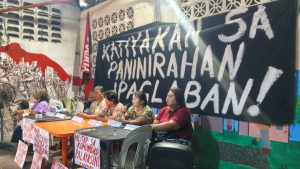
Urban poor group Kalipunan ng Damayang Mahihirap (KADAMAY) urged the Marcos administration to halt forced evictions and implement a comprehensive housing program ahead of President Ferdinand R. Marcos Jr.’s fourth State of the Nation Address (SONA), saying urban poor communities continue to bear the burden of rising living costs, displacement, and inadequate access to basic services.
KADAMAY said the Philippines’ recent classification as an upper middle-income economy by the World Bank does not reflect the realities faced by poor communities, arguing that many families continue to struggle with soaring prices, unstable employment, and limited access to healthcare, education, water, and electricity.
The group said worsening economic conditions have coincided with continued demolitions and evictions as the government clears communities for infrastructure and redevelopment projects. It cited demolition threats in Malantic in UP Diliman, Mayhaligue in Manila, and communities affected by a fire in Parola, Manila, as well as residents displaced by the North-South Commuter Railway (NSCR) and Pasig Bigyang Buhay Muli (PBBM) projects.
“Our government does not have a genuine housing program that addresses the country’s housing backlog. The current program appears to cater to the rich rather than provide affordable housing for the poor,” KADAMAY Secretary General Eufemia Doringo said during the group’s State of the Urban Poor forum.
She added that the government’s 4PH housing program shifts responsibility for socialized housing to private developers instead of directly responding to the needs of low-income families.
Ms. Doringo said relocation sites often force families to move far from their sources of income and public services, making it difficult to rebuild their lives after eviction.
“Relocation sites are far from people’s communities. They are far from health services, our children’s schools, water, electricity, and, most importantly, their livelihoods,” she said.
She added that many beneficiaries eventually abandon relocation sites because they cannot afford housing payments while trying to meet their families’ daily needs.
“Before families can pay for a house, they first have to put food on the table, earn a living, pay for transportation to work, and send their children to school,” Ms. Doringo said.
The organization also questioned the government’s housing policies, saying relocation beneficiaries face documentary requirements and recurring fees despite being classified as low-income households. It added that these financial obligations undermine the affordability of government housing.
“Our call is for a comprehensive housing program because housing is a fundamental right. Families relocated to government housing sites should have access to livelihoods and essential services,” Ms. Doringo said.
KADAMAY said this year’s State of the Urban Poor aims to expose what it described as continuing attacks on urban poor communities, deepen public understanding of their situation under the Marcos administration, and strengthen calls for decent, affordable, and people-centered housing at the national level.
The group said it also seeks to consolidate communities affected by demolitions and forced evictions into a broader campaign for housing rights ahead of the President’s SONA.
Through its July 24 forum, residents shared their experiences and discussed proposals for securing housing, protecting livelihoods, and expanding access to basic social services.
Calling for broader public support, Ms. Doringo urged urban poor communities to continue organizing beyond the SONA.
“We are calling on all urban poor communities to unite. Let us raise our voices and fight for our right to housing. Whatever the government does, the urban poor already know the reality on the ground, and we will not back down,” she said. She added that KADAMAY will continue holding monthly State of the Urban Poor activities to highlight issues affecting low-income communities, including rising prices of food, electricity, water, and fuel. — Kaizzer Angela Marie V. Manuba