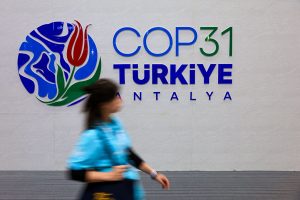
The Center for Energy, Ecology, and Development (CEED) will bring concerns over Philippine electricity costs, fossil fuel dependence, and threats to marine ecosystems to the 31st United Nations Climate Change Conference (COP31) in Antalya, Türkiye, as climate negotiations put pressure on governments to translate international commitments into concrete action.
Through a series of side events and a press conference, CEED and its partner organizations will highlight how discussions on just energy transition, climate finance, community participation, and marine protection could affect livelihoods and environmental security across Southeast Asia.
COP31, running from Nov. 9 to 20, comes as governments negotiate the implementation of a just transition mechanism, climate finance obligations, emissions reductions, and stronger adaptation measures.
CEED’s participation will focus on the implications of continued fossil fuel dependence, particularly for Filipino households facing high electricity costs and coastal communities exposed to climate change, industrial development, pollution, and fossil fuel infrastructure.
In a discussion titled “People-Centered Just Energy Transition: Shared Experiences, Best Practices and Actionable Solutions,” CEED, together with the Natural Resources Defense Council, Centre for Environment Education, and Coshare Environment, will bring together experiences from the Philippines, India, China, Mexico, and other countries to examine how energy transitions can deliver tangible benefits to communities.
The discussion will look into how governments can make renewable energy more affordable and accessible while ensuring that financing the transition does not place additional burdens on consumers.
CEED will also join the International Energy Agency, Coastal Livelihood and Environmental Action Network and Climate Era Catalyst in a discussion on community participation in energy policymaking.
The session, titled “From People Power to Public Policy: Empowering Communities and Local Action for Inclusive Energy Transitions in Asia-Pacific,” will examine how grassroots organizations and local governments can influence energy policies and advance community-led renewable energy initiatives.
Marine protection will also be among CEED’s priorities at the conference.
Together with the Department of Environment and Natural Resources and UK Partnering for Accelerated Climate Transitions, the group will hold a forum titled “Shared Seas, Shared Solutions: Marine Protection for Climate, Nature and People.”
The discussion will focus on marine protection, participatory marine spatial planning, and coordination across sectors to strengthen coastal resilience.
It will highlight threats facing the Verde Island Passage, one of the world’s most biodiverse marine corridors, where communities face mounting pressures from climate change, industrial development, pollution, and fossil fuel infrastructure.
The forum will also examine how countries can meet the global commitment to protect 30% of land and sea by 2030 under the Kunming-Montreal Global Biodiversity Framework.
CEED will likewise hold a press conference titled “Don’t Drill Paradise: Protecting Palawan and Southeast Asia’s Ecological Frontiers from Fossil Fuels,” focusing on offshore oil and gas exploration around Palawan and its potential consequences for marine biodiversity, fisheries, Indigenous Peoples, and coastal livelihoods.
CEED’s Don’t Drill Paradise research identified 14 of the Philippines’ 22 active petroleum service contracts in waters surrounding Palawan, raising concerns about the cumulative environmental impacts of further fossil fuel exploration and development.
The group will examine the continued pursuit of fossil fuel projects near ecologically sensitive marine areas despite international commitments to reduce emissions and protect biodiversity.
Through these engagements, CEED seeks to connect the Philippines’ energy and environmental concerns with broader climate negotiations, particularly the need to ensure that energy security, climate action, and economic development do not come at the expense of vulnerable communities and marine ecosystems. — Kaizzer Angela Marie V. Manuba