By Justine Irish D. Tabile, Senior Reporter
A PROPOSED 75% excise tax on luxury vehicles could further dampen automotive sales, industry groups warned, even as the government expects the measure to generate P1.65 billion in additional revenues.
The Chamber of Automotive Manufacturers of the Philippines, Inc. (CAMPI) and other industry representatives raised concerns that the proposed tax on vehicles with a net manufacturer or importer’s price exceeding P8 million could weaken already sluggish demand.
The higher tax is part of the Department of Finance’s (DoF) Promoting Growth, Revenue, and Equity towards Socio-economic Sustainability tax reform package, which it hopes will be approved next year.
DoF Undersecretary Karlo Fermin S. Adriano said the proposal would add a new tax bracket for automobiles valued above P8 million. These vehicles are currently subject to the 50% rate imposed on vehicles with a net manufacturer or importer’s price above P4 million.
“The rationale here is to improve the progressivity of the tax system, wherein those who have more capacity to pay should pay more in terms of nation building,” Mr. Adriano told a House of Representatives hearing on Wednesday.
The proposal would retain existing excise tax exemptions for electric vehicles (EVs) and certain commercial and public transport vehicles. Hybrid vehicles would remain subject to half the applicable excise tax rate.
However, the DoF’sP1.65-billion estimate is lower than the earlier P3.91-billion projection, which Mr. Adriano said had included changes to the taxation of electric and hybrid vehicles.
The revised estimate also accounts for weaker demand resulting from higher prices, he said.
“We already included elasticity assumptions such that the increase in price will actually decrease demand for these commodities,” he said.
CAMPI President Jose Ma. “Jing” Atienza, however, said the proposal could affect four or five brands, noting that premium vehicle sales are still below levels recorded before the implementation of the Tax Reform for Acceleration and Inclusion (TRAIN) law in 2018.
“And that drop really has not improved or has not gone back to the old numbers. And so, of course, we would like to support our member brands in this very small market,” he said.
Mr. Atienza said the current 50% excise tax rate is already at “a very high level.”
“Whenever you increase prices, volumes are affected, and probably the revenue targets won’t be achieved because of the reduced volumes,” he added.
The proposed increase also comes amid a broader slowdown in vehicle sales, which Mr. Atienza attributed to social and political issues, high fuel prices and tighter bank approvals.
“As of October, we are down around 6-7% from last year. But that 6-7% would mean there’s also some shift in volumes from one segment of our member brands to another, especially the EVs,” he said.
FERRARI ORDERS AT RISK
San Miguel Corp. (SMC) subsidiary SMC Asia Car Distributors Corp. Chief Financial Officer Jevie Bryan Uy likewise warned that higher taxes could undermine sales in an already small market.
“We respectfully submit, however, that increasing the tax on an already heavily taxed and relatively small automotive segment may not be the most efficient means of achieving this objective,” he said.
Citing CAMPI data, he said sales of premium-brand vehicles priced at P2.1 million and above fell to 1,916 units after the TRAIN law was implemented in 2018 from 4,245 units in 2017.
While sales recovered from 2023 through 2025 due to tax incentives on EVs and hybrid vehicles, it remained below the 2017 level.
“With the reduction in vehicle sales, this would not only reduce excise tax collections, but may also result in lower value-added tax, Customs duties, corporate income taxes, registration related revenues and other taxes generated by the automotive industry,” said Mr. Uy.
He projected a 52% decline in demand in the coming years if the higher rate takes effect.
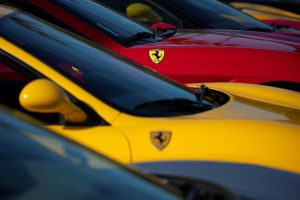
San Miguel’s automotive group, which imports and distributes BMW and Ferrari vehicles in the country, has already held off ordering two BMW models for next year in anticipation of the measure.
Mr. Uy said the company also has orders for 23 Ferrari units for next year, but some customers have raised the possibility of canceling if the tax increase proceeds.
He estimated that the proposal could raise selling prices by around 20%, potentially encouraging buyers to turn to gray market imports.
“With the existing economic conditions and high inflation, borrowing rates, weak currency, and GDP growth, if the proposed excise tax increase is implemented, we will not survive,” he added.
previous post
