By Marron Joshua F. Mendoza
PRESIDENT Ferdinand R. Marcos, Jr.’s fifth State of the Nation Address (SONA) on Monday has been challenged by farmers on the growth rates and cash aid figures cited in his speech to Congress.
Leonardo Q. Montemayor, chairman of the Federation of Free Farmers and former agriculture secretary, cited declining growth for rice in the first quarter of 2026 and declining sugar production.
“Where is he getting his data? For rice, first quarter 2026 showed negative growth (6%). Sugar is projected to fall by 11%,” Mr. Montemayor told BusinessWorld via chat.
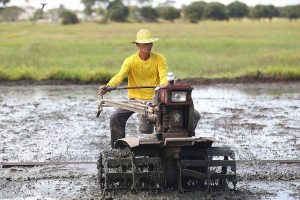
In his address, Mr. Marcos highlighted the rise in agricultural production since 2023 due to the administration’s increased support for the industry, improved infrastructure and irrigation, and increasing levels of mechanization, which improved the output for palay (unmilled rice), corn, sugar, pork and chicken.
The President noted the support extended via the Presidential Assistance to Farmers, Fisherfolk, and Families (PAFFF) to nearly 2 million farmers and fisherfolk to help them cope with rising fuel costs.
Mr. Montemayor said only P2,325 worth of financial aid was given to farmers and fisherfolk, while public transportation workers received P5,000 each.
“The number of rice farmers is 3 million; fisherfolk about 2 million, coconut farmers 3 million, but PAFFF beneficiaries total 2 million only, so most rural producers do not receive support,” Mr. Montemayor said.
Jayson H. Cainglet, executive director of the Samahang Industriya ng Agrikultura, called the PAFFF inadequate and delayed in many areas, saying that the scale of the support it provided did not match the extent of the challenges facing agriculture particularly after fuel prices spiked during the Persian Gulf fighting.
“Rising fuel costs translate directly into higher expenses for land preparation, irrigation, harvesting, drying, transportation, and fishing operations. Without stronger and more timely support, production costs will continue to rise while farm incomes remain stagnant,” Mr. Cainglet told BusinessWorld via Viber.
The President also highlighted the National Food Authority’s (NFA) efforts to buy palay from farmers at support prices more generous than those offered by traders stock, as well as the P20 per kilo rice program, which he said provided over 26,000 tons of rice to more than 2.5 million families nationwide, with a target of reaching 8 million families in need by the end of his presidency.
Mr. Cainglet questioned the NFA’s capacity to procure palay.
He noted that the NFA can only procure less than 2% of the annual palay harvest with a budget of about P9 billion. The vast majority of the crop is acquired by private traders and millers with parallel interests in importing rice, reducing farmers’ bargaining power in setting farmgate prices.
“If the government is serious about protecting rice production and stabilizing farmgate prices, the NFA must be given the financial capacity to play a meaningful role in the market,” Mr. Cainglet told BusinessWorld.
Mr. Cainglet called a palay procurement budget of at least P50 billion to help the NFA “purchase a significantly larger share of domestic production, provide farmers with a reliable buyer at fair prices, strengthen the rice buffer stock, and reduce excessive dependence on private market players.”
Regarding the coconut industry, Mr. Marcos cited the planting program of 18 million coconut trees, with a goal of planting 100 million trees by the end of his term. Mr. Montemayor said the 18 million-tree claim of needs to be validated and called the goal 100 million trees “unrealistic.”
Mr. Cainglet said he would have appreciated more clarity on free trade negotiations with the European Union, Canada, and Chile, specifically proposals to reduce tariffs on agricultural commodities.
“Further tariff reductions under new Free Trade Agreements, without adequate safeguards for domestic producers, risk inflicting even greater damage on Philippine agriculture. Trade liberalization should not come at the expense of our farmers, fisherfolk, and national food security,” Mr. Cainglet said.
“Any agreement must ensure a level playing field, preserve policy space to support local producers, and strengthen — rather than weaken — our capacity to feed our own people,” he added.
Mr. Cainglet commended the administration’s efforts to implement the P20 rice program, continue the distribution of land to agrarian reform beneficiaries, and improve post-harvest facilities, and hoped that the subsidies for consumers of rice someday filtered down to farmers.